 Short
Free teaching resources
Printable Phonics Resources
Simple pages for home and classroom practice
Choose a resource, download the PDF, and practise a few words at a time. Each printable connects to an online lesson with audio and a short activity.
Jump to what you need
Browse by category
New illustrated collection
60 Short Vowel Picture Cards
Twelve illustrated words for each short vowel. Download individual PNG cards, picture-only images, and A4 or US Letter printable PDFs for listening, sorting, reading and spelling.
Browse Picture CardsLetters & sounds
Alphabet & Beginning Sounds
26 illustrated letter cards, a complete alphabet poster, sound matching and sorting activities, and an adult teaching guide.
Explore Alphabet ResourcesDownload PDFs
Short Vowel Word Lists
One focused word list for each short vowel sound.
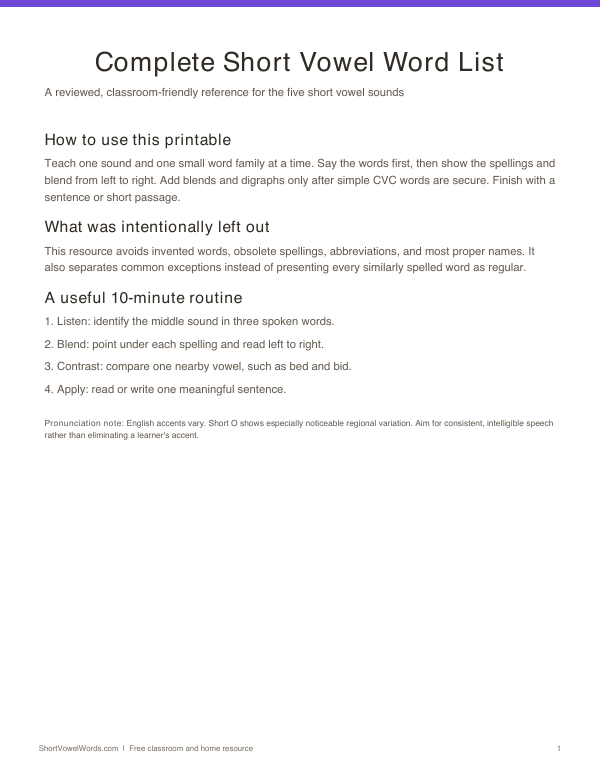
Complete Short Vowel Word List
A full teaching reference with grouped words, family patterns, and progression notes.
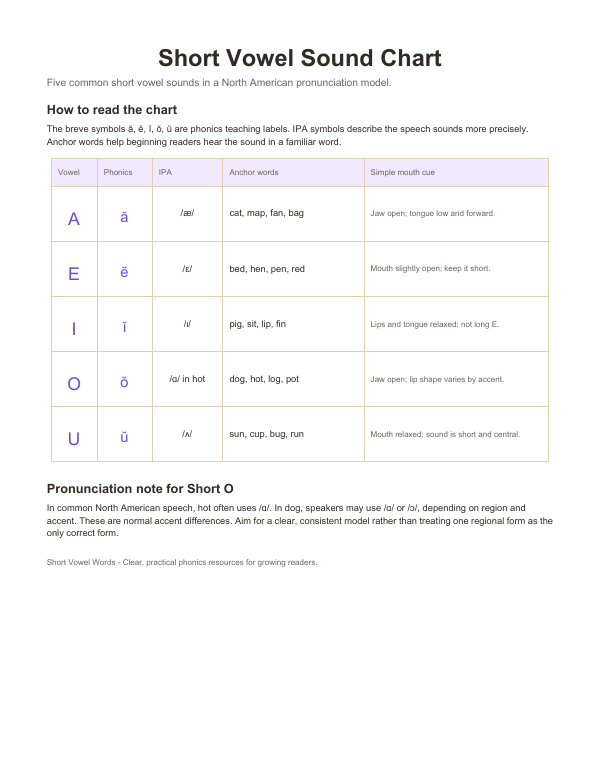
Short Vowel Sound Chart
A quick visual chart for hearing and comparing all five short vowel sounds.
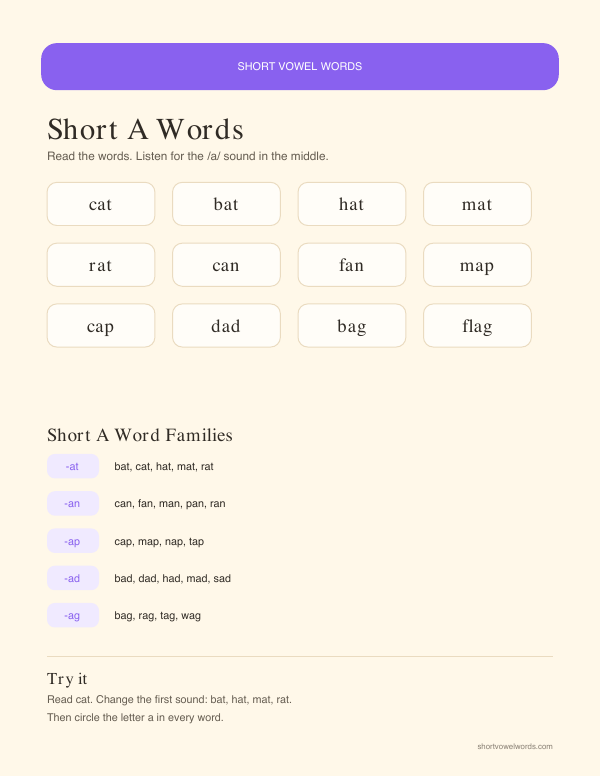
Short A Words
A simple Short A list for first decoding practice and quick review.
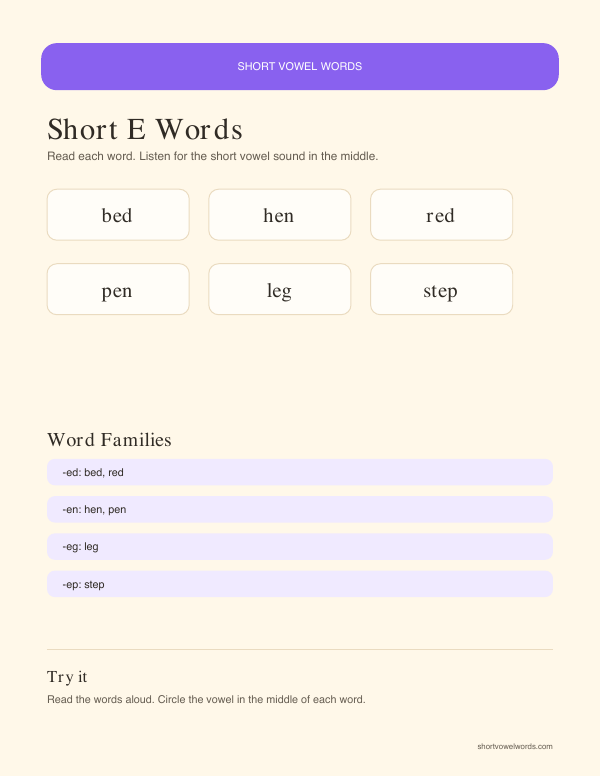
Short E Words
Useful for learners who need extra practice keeping /e/ clear and short.
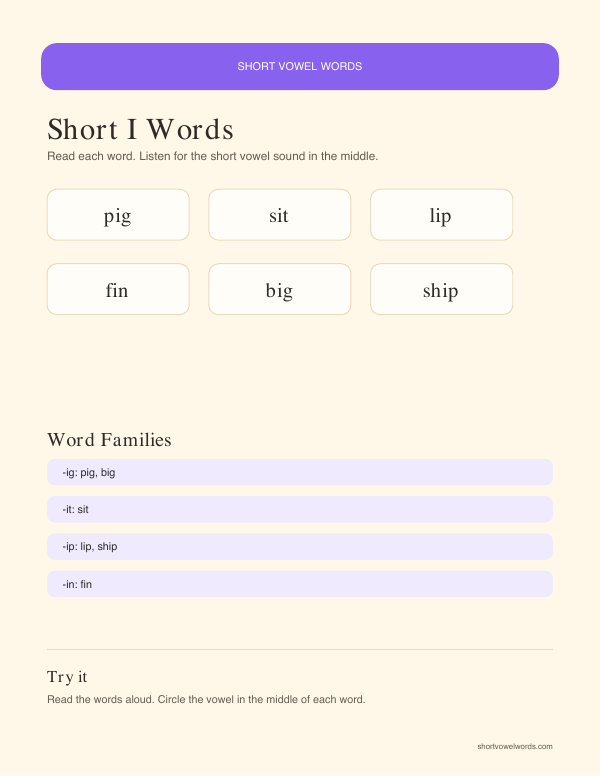
Short I Words
A focused page for reading, sorting, and rereading Short I words.
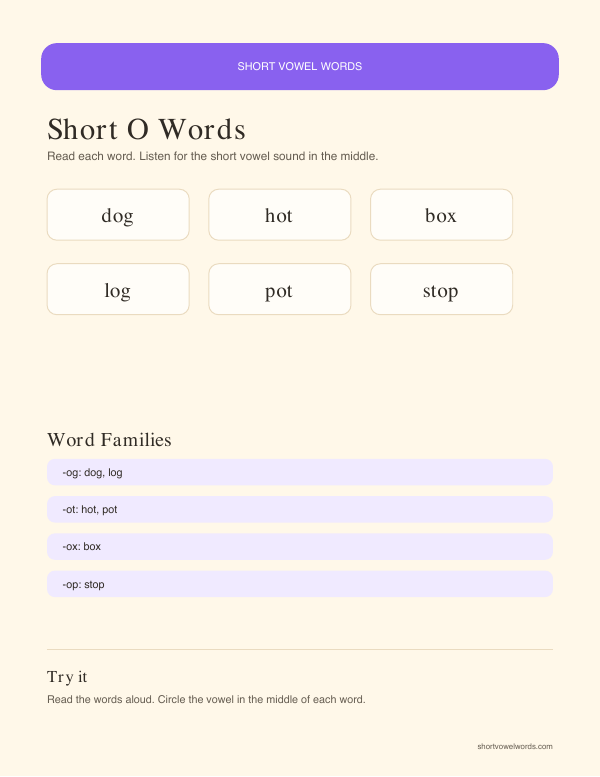
Short O Words
Helps learners practise the short o sound in common one-syllable words.
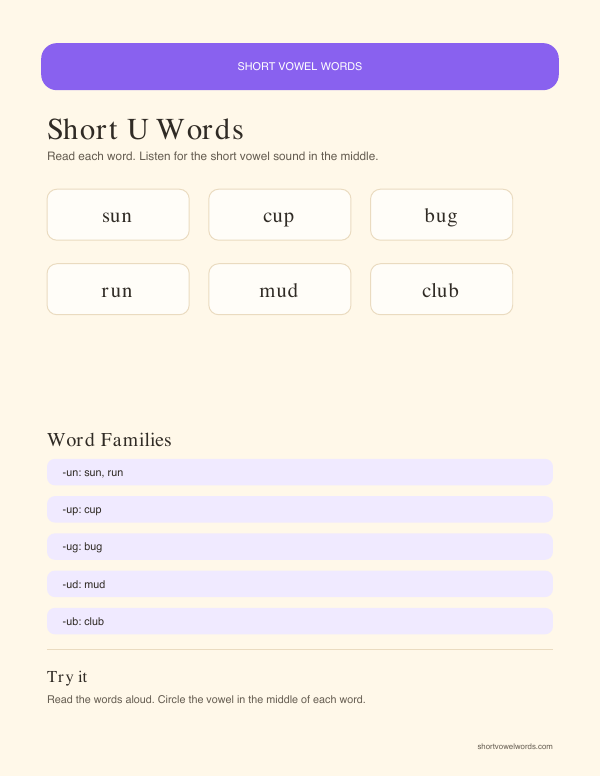
Short U Words
A clean Short U sheet for sounding out, marking, and reading aloud.
Download PDFs
Short Vowel Worksheets
Three levels of printable practice, each with a separate answer page.
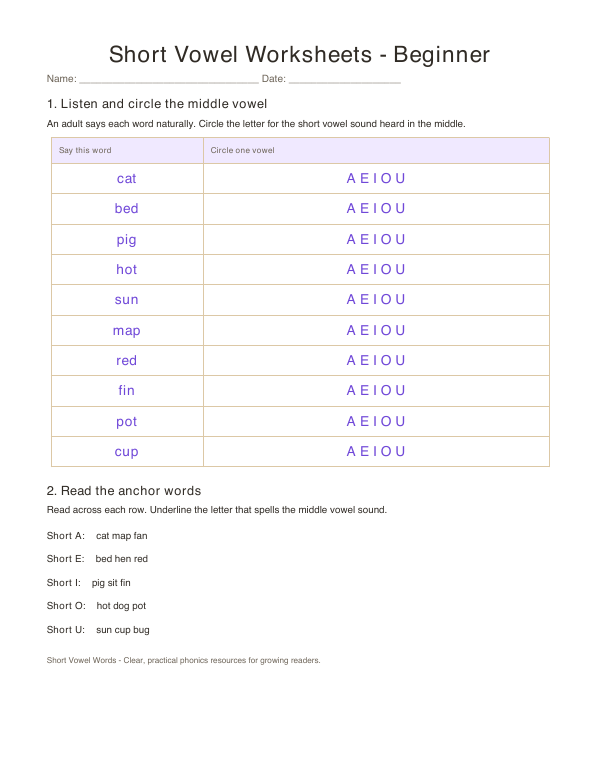
Beginner Worksheets
Best for early learners matching sounds to letters and spotting the middle vowel.
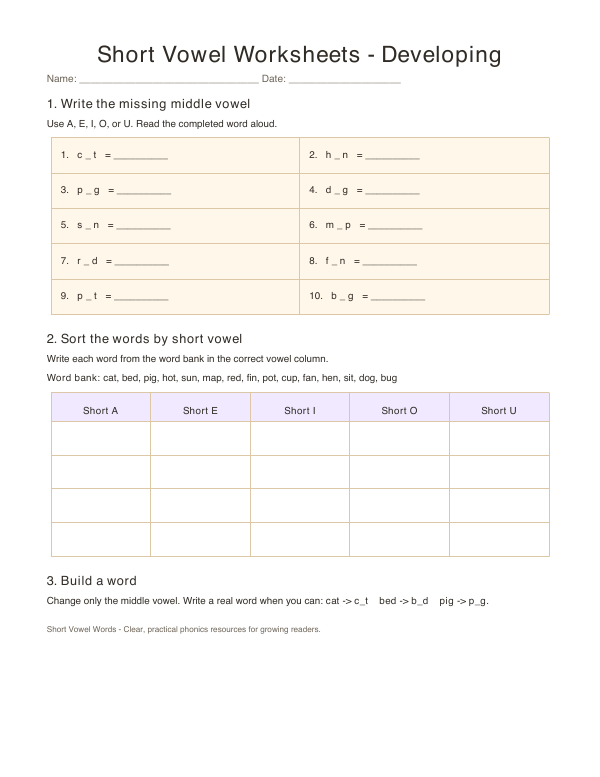
Developing Worksheets
Adds missing-vowel work, simple sorts, and guided CVC building.
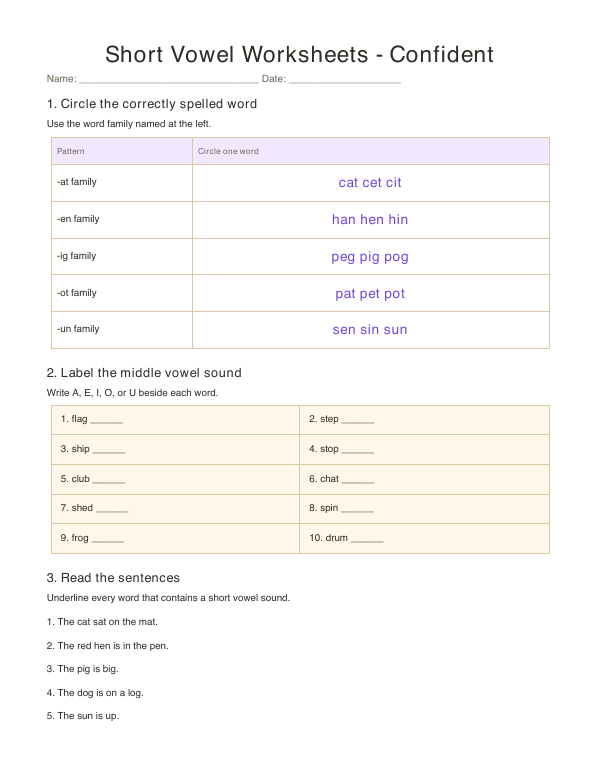
Confident Worksheets
Designed for mixed review, short contrasts, and sentence-level application.
Download PDFs
CVC and Word Family Practice
Use these for a quick warm-up, reading centre, or home practice.
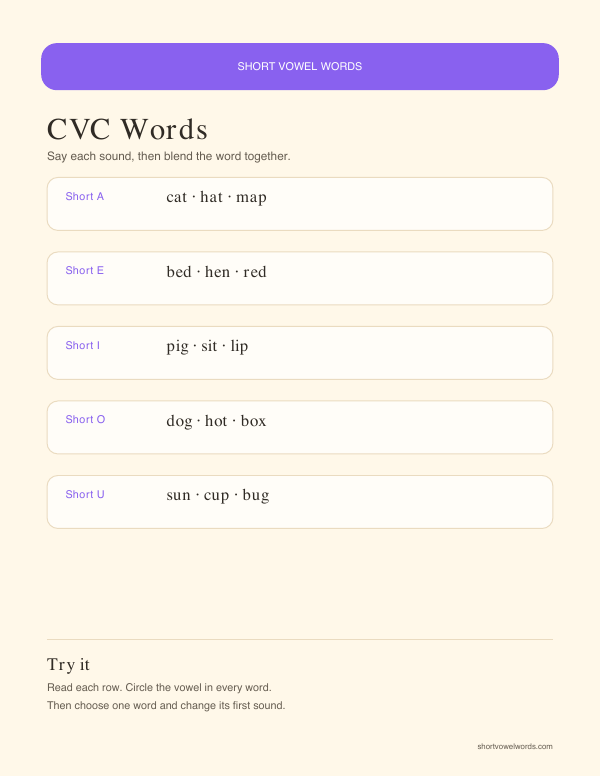
CVC Words
A one-page starter sheet for blending consonant-vowel-consonant words.
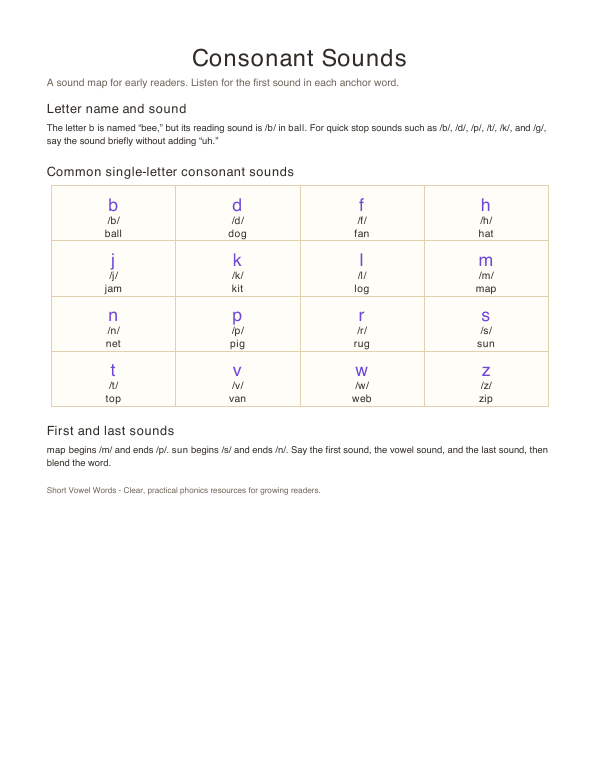
Consonant Sounds
Useful for teaching mouth position, voicing, and common consonant anchors.
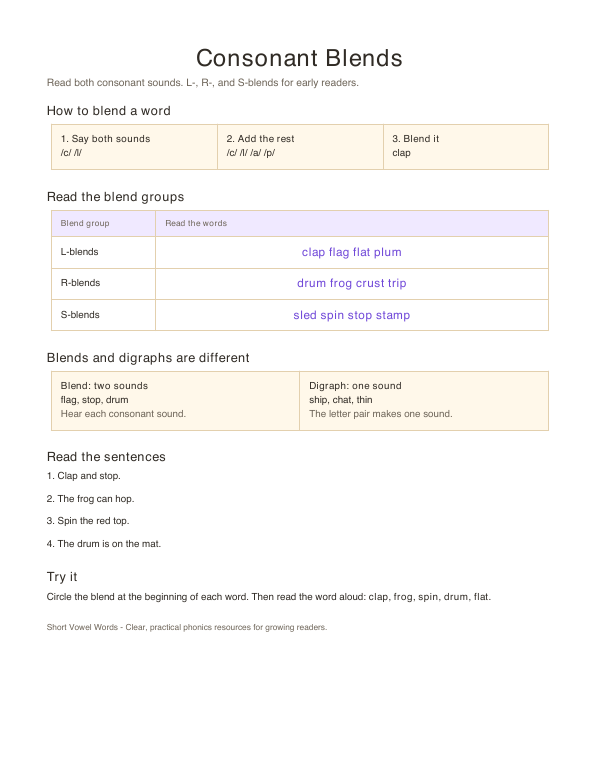
Consonant Blends
A practical review page for common beginning and ending blends.
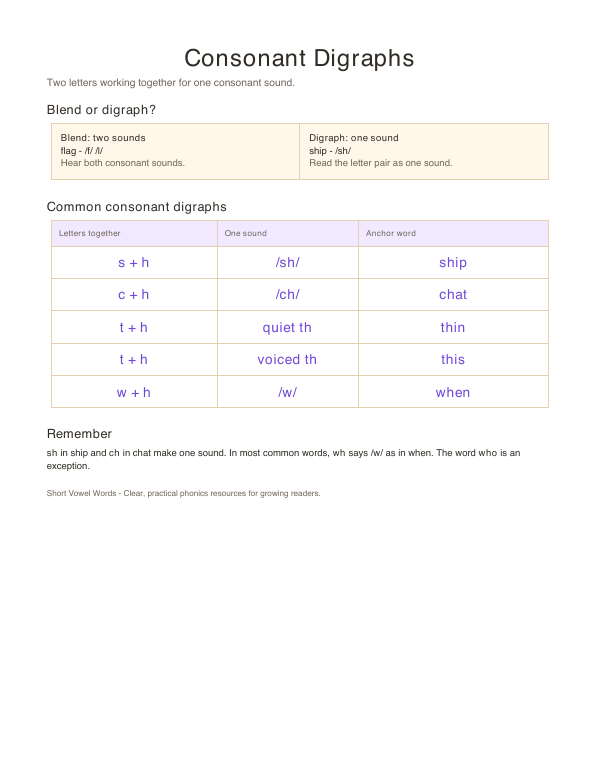
Consonant Digraphs
A clear printable for sh, ch, th, wh, and other high-value digraphs.
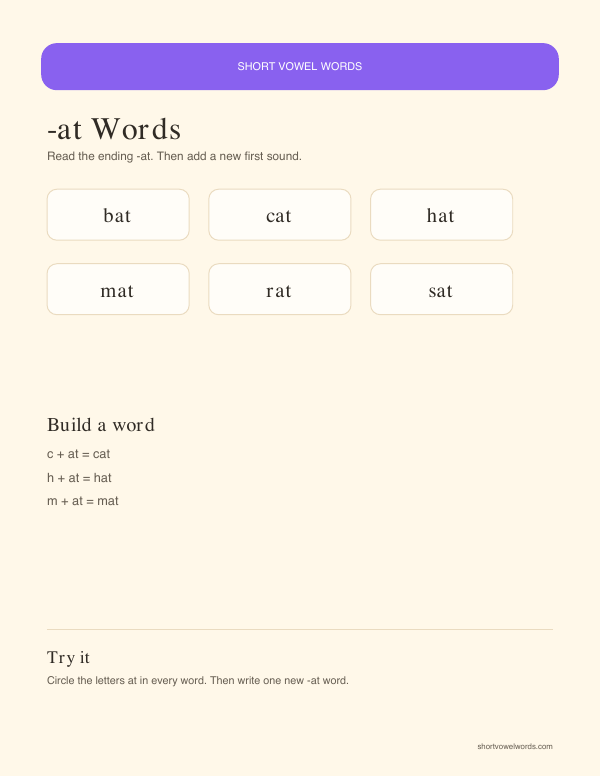
-at Words
A simple word-family sheet built around one of the easiest Short A patterns.
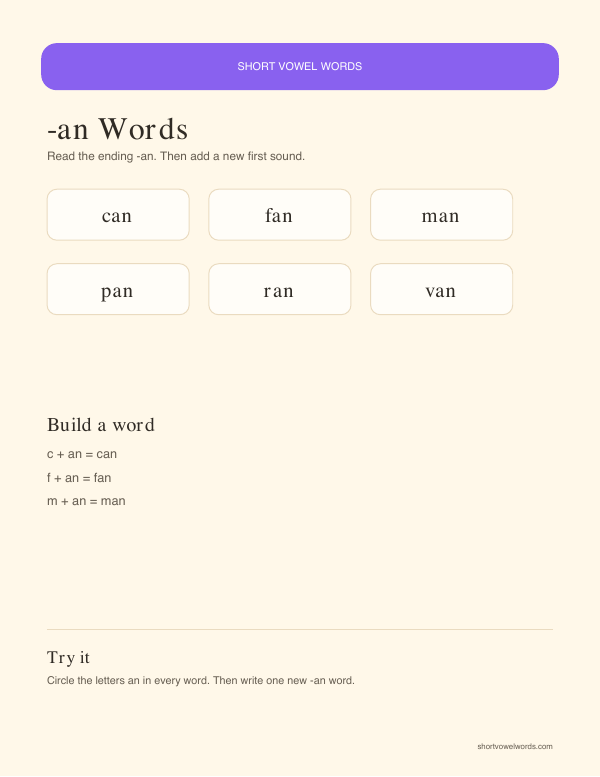
-an Words
Good for quick decoding, word building, and short sentence warm-ups.
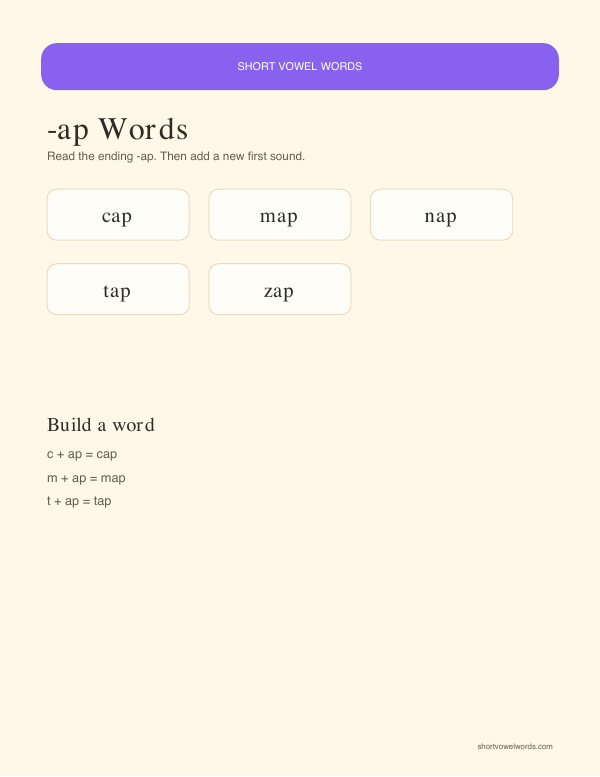
-ap Words
A compact practice sheet for blending and rereading common -ap words.
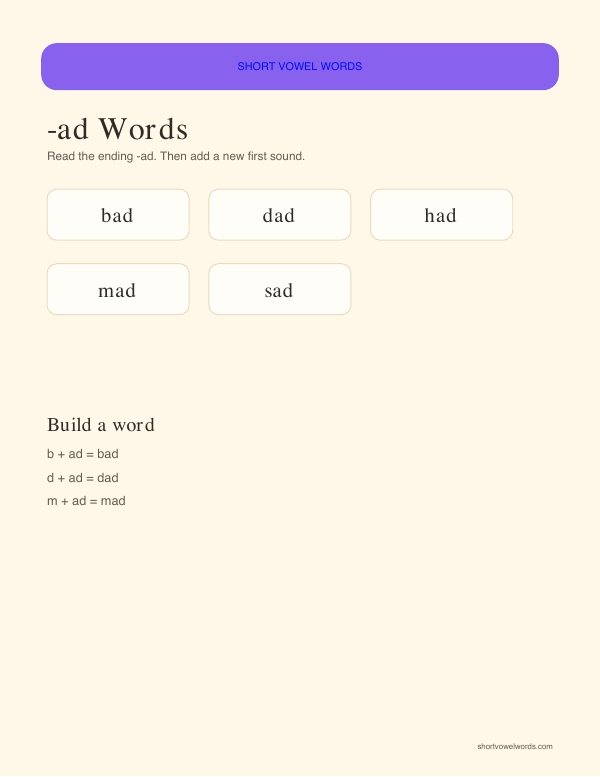
-ad Words
Helps learners keep the final -ad pattern stable while changing the first sound.
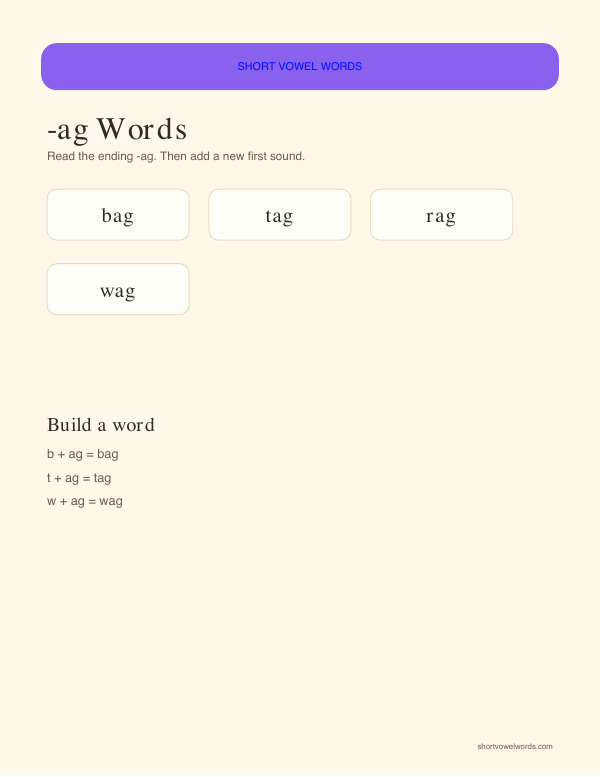
-ag Words
A short printable for reading and reviewing everyday -ag family words.
A simple way to practise
- Listen to a few words on the matching lesson page.
- Read the words together and underline the vowel or ending pattern.
- Use the printable for a short repeat-reading session.
Why these downloads work
Printable phonics sheets are most useful when the task is narrow
A good printable does not try to teach everything at once. It gives the learner one clear sound, one pattern, or one level of review. That makes it easier to use in class, at home, or in a short intervention block. These resources are strongest when they are paired with the matching online page first, because the learner hears the target sound before working only from print.
Parents and teachers can begin quickly because each sheet has one main purpose.
Printed pages work well for calm repetition after the sound has already been introduced aloud.
When a learner confuses vowels, a focused sheet makes it easier to isolate the exact pattern and try again.
Word lists, worksheets, and sound charts can all be reused for review, centers, homework, or quick check-ins.
Choose the right sheet
What these printables are good for
Use the shorter word-list sheets when a learner needs a calm five-minute reread instead of a full lesson.
The worksheet levels work well when you want one target skill, a clear task, and a separate answer page.
Word family and CVC sheets are easiest for families because they focus on a single pattern at a time.
Open the matching lesson page first so the learner hears the sound accurately before using the PDF.
Choose by learner stage
Which printable to start with
This kind of sequencing keeps practice purposeful. It also helps adults avoid the common mistake of giving mixed review pages before a child can confidently hear and read the target vowel in isolation.